

More churches around the world are revisiting long-standing questions about leadership, authority, and biblical interpretation. One of the most discussed topics within modern Christianity is whether women should serve as pastors, elders, or spiritual leaders in congregations. The debate has continued for decades, shaped by theology, church tradition, and changing cultural expectations. While opinions differ widely, the conversation reflects deeper questions about faith, community, and the role of Scripture in modern church life.
Religious publications and church ministries continue to publish teachings examining the biblical arguments surrounding women pastors and leadership roles in the church. These discussions often focus on passages from the New Testament, especially writings attributed to the Apostle Paul. At the same time, many believers point to examples of female leadership found throughout biblical history. The ongoing disagreement shows how differently Christian communities interpret the same texts.
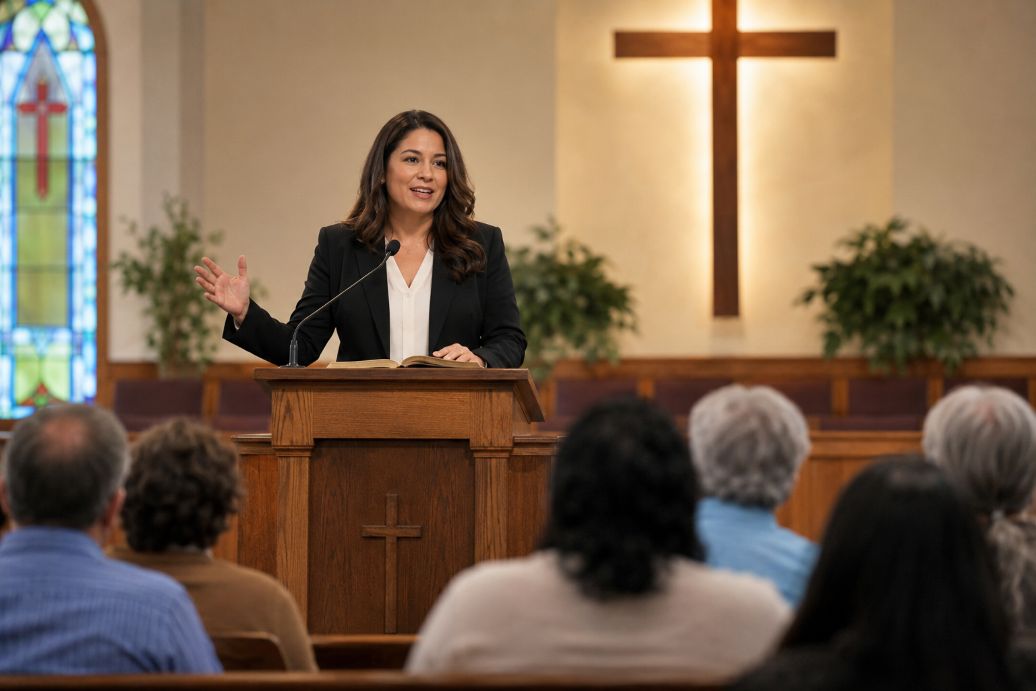
Why the Question Remains Important Today
Church leadership has always carried spiritual and social influence. Pastors guide worship, teach Scripture, counsel families, and help shape the moral direction of congregations. Because of this responsibility, debates over leadership roles often become deeply personal for church members.
Research from Pew Research Center shows that religious affiliation and church participation continue to evolve across many countries, especially among younger generations. These changes have encouraged many churches to reevaluate traditions and leadership structures. Some congregations see broader leadership opportunities for women as part of adapting to modern church life, while others believe maintaining traditional pastoral roles preserves biblical authority.
Despite theological disagreements, most Christian groups share the belief that Scripture should remain central in deciding matters of church leadership. The challenge comes from interpreting passages that appear to support different conclusions.
Biblical Passages at the Center of the Debate
Several New Testament verses are frequently referenced in conversations about female church leadership. Among the most discussed are 1 Timothy 2:12 and 1 Corinthians 14:34-35. Many conservative churches interpret these passages as instructions limiting pastoral authority to men.
Scholars from institutions such as Dallas Theological Seminary and Southern Baptist Theological Seminary have published studies supporting complementarian theology, a belief that men and women have equal value before God but different responsibilities within the church and family.
On the other hand, many theologians argue that these passages must be understood within their historical and cultural setting. Biblical researchers connected to organizations like Fuller Theological Seminary and Christians for Biblical Equality suggest that certain instructions addressed specific problems in early churches rather than establishing permanent restrictions for all congregations.
These differing interpretations explain why churches reading the same Bible often reach very different conclusions about female ministers and spiritual leadership.
Examples of Women Leaders in the Bible
Supporters of women serving in ministry often point to several notable women mentioned in Scripture. Deborah, found in the Book of Judges, served as both a prophet and judge in ancient Israel. Priscilla appears in the New Testament as a respected teacher who helped instruct Apollos, an early Christian preacher. Phoebe is described in Romans 16 as a deacon or servant of the church.
Historians from Baylor University and Harvard Divinity School note that women played visible roles in many early Christian communities. Although their exact responsibilities remain debated, historical records suggest women participated in teaching, charitable work, and church organization during Christianity’s early growth.
These examples are often used to support the view that leadership opportunities for women existed in biblical history, even if their roles differed from modern pastoral positions.
Different Denominations, Different Views
Christianity does not have a single position on female clergy. Denominations vary widely in both policy and practice.
The Roman Catholic Church does not ordain women as priests, maintaining a position rooted in centuries of church tradition and theological teaching. Similarly, many conservative evangelical groups reserve senior pastoral positions for men.
Meanwhile, denominations such as the United Methodist Church, the Evangelical Lutheran Church in America, and parts of the Anglican Communion ordain women and allow them to serve as bishops, pastors, and theological educators.
These divisions are not always hostile. In many cases, churches acknowledge their differences while continuing to cooperate on missions, charity programs, and community outreach. Even so, disagreements over leadership often reflect larger conversations about biblical interpretation and church authority.
The Influence of Culture and Society
Modern culture has also influenced how churches approach leadership discussions. Over the past century, women have entered leadership positions across education, business, politics, and public service. As a result, some believers question why church leadership should remain different.
Others argue that churches should resist cultural pressure if it conflicts with biblical teaching. Leaders within conservative denominations frequently warn against allowing social trends to reshape doctrine. Experts from The Gospel Coalition and Desiring God have written extensively about preserving theological consistency even when cultural expectations change.
At the same time, advocates for women in ministry argue that excluding qualified female leaders can discourage participation and create unnecessary barriers within church communities. These concerns are especially visible among younger Christians who often place strong value on equality and inclusion.
Because churches operate within broader society, the conversation continues to evolve. Technology, global communication, and online ministry have further expanded the visibility of female Bible teachers and Christian speakers around the world.
Finding Unity Despite Disagreement
One reason this topic remains sensitive is because it touches both personal faith and church identity. For some Christians, traditional leadership structures are closely connected to obedience to Scripture. For others, opening ministry roles to women reflects a fuller understanding of spiritual gifts and service.
Religious experts from Christianity Today observe that many congregations are learning to discuss these issues with greater patience and respect, even when disagreements remain unresolved. Instead of treating the debate as a battle between opposing sides, some churches encourage thoughtful study, prayer, and historical understanding.
That approach has become increasingly important as churches navigate wider social and generational changes. Congregations today face growing pressure to maintain unity while also addressing difficult theological questions.
READ ALSO: How Religion Shapes Human Identity and Pursuit of Meaning?
Conclusion
The debate over female church leadership continues because it involves deeply held beliefs about Scripture, tradition, and spiritual authority. Some churches believe pastoral leadership should remain limited to men, while others believe women can faithfully lead congregations and teach biblical truth.
Although opinions differ, the discussion has encouraged many Christians to study the Bible more carefully and examine the historical foundations of their beliefs. It has also highlighted the important role women have played throughout the history of Christianity, whether through teaching, ministry, service, or community leadership.
As churches continue these conversations, the focus for many believers remains the same, honoring faith, preserving unity, and seeking wisdom in how spiritual leadership is understood within the modern church.